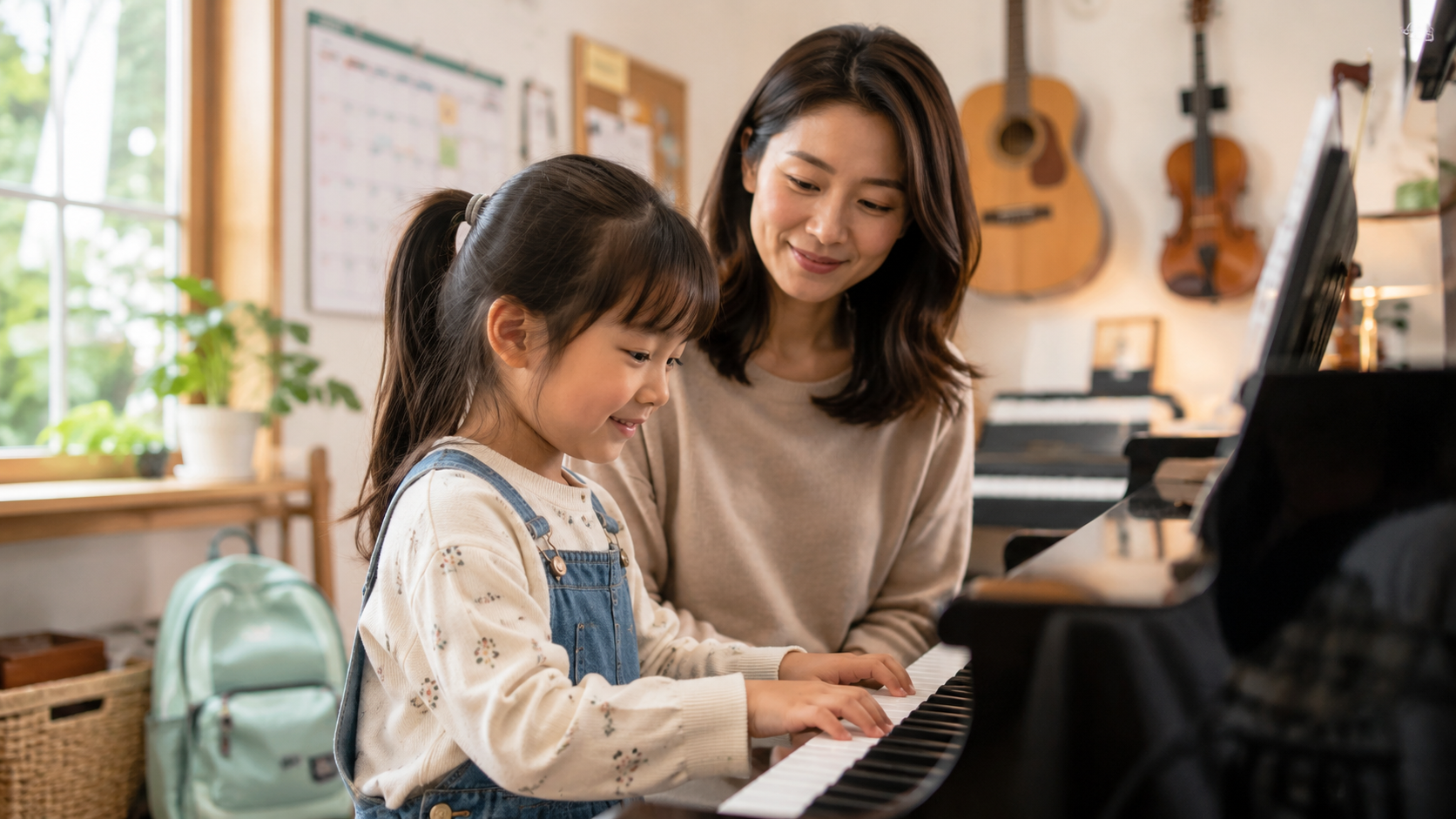
You or your child wants to learn an instrument. Great!
There's just one small problem. On Monday, they're excited about guitar. By Wednesday, they've decided piano sounds pretty cool. And over the weekend? Now they're talking about drums.
Sound familiar?
Choosing a first instrument can feel like a bigger decision than it needs to be. You want your child to enjoy learning music, and naturally, you'd like to make a good choice from the beginning.
But here's something worth remembering: The first instrument doesn't have to be the forever instrument.
Parents sometimes worry that choosing the wrong instrument means wasted time, wasted money, or a child who loses interest in music altogether.
That's a lot of pressure to put on one decision.
The good news is that learning music isn't quite so rigid. A child who starts with piano and discovers a love for Saxophone a year later hasn't wasted that year. They've spent time learning rhythm, recognizing notes, listening carefully, and getting comfortable with making music.
Those skills don't disappear when they pick up something new.
Think of the first instrument as a starting point rather than a lifelong commitment.
And if your child already has their heart set on something? That's worth paying attention to.
Here's a question worth asking your child:
If you could play any instrument in the world, what would you choose?
You might be surprised by the answer.
Maybe they love watching someone play drums. Maybe they pretend to play clarinet whenever their favorite song comes on. Or maybe they're fascinated by the piano at Grandma's house.
Those little moments of curiosity can tell you quite a bit.
Kids are more likely to want to practice something they're genuinely interested in. That doesn't mean every practice session will be easy, of course. Learning anything new takes patience. But having that initial excitement can make a real difference.
And what if your child doesn't have a favorite?
That's okay, too. Some students don't discover what they love until they've had a chance to explore a little.
Interest matters, but so does everyday life.
Before committing to an instrument, think about a few practical things.
Where will they practice?
A keyboard might fit nicely into a bedroom or living room. An acoustic drum kit takes considerably more space, but most start with a drum pad and a pair of sticks. And, "when it comes to noise", we do have ways to control volume - just ask us!
What's comfortable for your child?
Some instruments come in smaller sizes designed for younger players. Others require a little more physical coordination or hand strength. A music teacher can help you understand what's realistic for your child's age and development. We've seen it all at the Elkhart School of Music, and we will guide you to find the right instrument for you and/or your child.
What's comfortable for your budget?
You don't necessarily need to purchase an expensive instrument right away. Depending on what your child chooses, a beginner model, used instrument or rental may be worth considering.
The goal is to find something your child is excited about that also makes sense for your family.
They might!
And that's not necessarily a bad thing.
Children discover new interests as they grow. Someone who loves piano at seven might become fascinated with drums at ten. Another student might start with guitar and eventually want to try singing.
That's part of discovering music.
Of course, there's a difference between wanting to explore something new and wanting to change because learning has become challenging. Almost every student encounters moments when practicing feels difficult.
Before making a switch, talk with their teacher. Sometimes a different song, a new goal, or a small change in the lesson approach can help. We can help navigate whether it's time to push through, go in a different direction, if a short break is needed, or if trying another instrument really is the right move.
Either way, the conversation is more important than getting the original choice perfect.
You can spend weeks researching instruments, watching videos, and asking friends what their children play.
A little research is helpful. But eventually, there's only so much you can figure out without actually experiencing music lessons.
You don't need to have everything planned out before talking with a professional.
At Elkhart School of Music, we enjoy helping families think through these decisions. Whether your child has one instrument in mind or five, we're happy to talk about their interests, their readiness, and what might be a comfortable place to start.
Because the most important thing isn't choosing the perfect instrument.
It's giving your child the opportunity to discover what they enjoy about music.
What if my child wants to switch instruments later?
That's perfectly okay. Musical concepts, including rhythm, listening, and understanding notes, can carry over from one instrument to another. Before switching, it's worth talking with your child's teacher to understand what's prompting the change and whether another instrument might be a better fit.
Is my child too young for certain instruments?
YES! It depends on the instrument and your child's individual development. Some instruments are available in smaller sizes, while others require more hand strength, coordination, or attention. A teacher can help you determine what's appropriate without pushing your child to begin before they're ready.
What if my child wants music lessons but doesn't know which instrument to play?
That's a great reason to have a conversation with us. Talk about the kinds of music your child enjoys, the sounds that interest them, and what instruments might work well at home. You don't need a final decision before reaching out.
Thinking about music lessons for yourself or your child?
We'd love to help you explore the possibilities. Contact Elkhart School of Music in downtown Elkhart, and we'll help you figure out a good place to begin.